
Artist
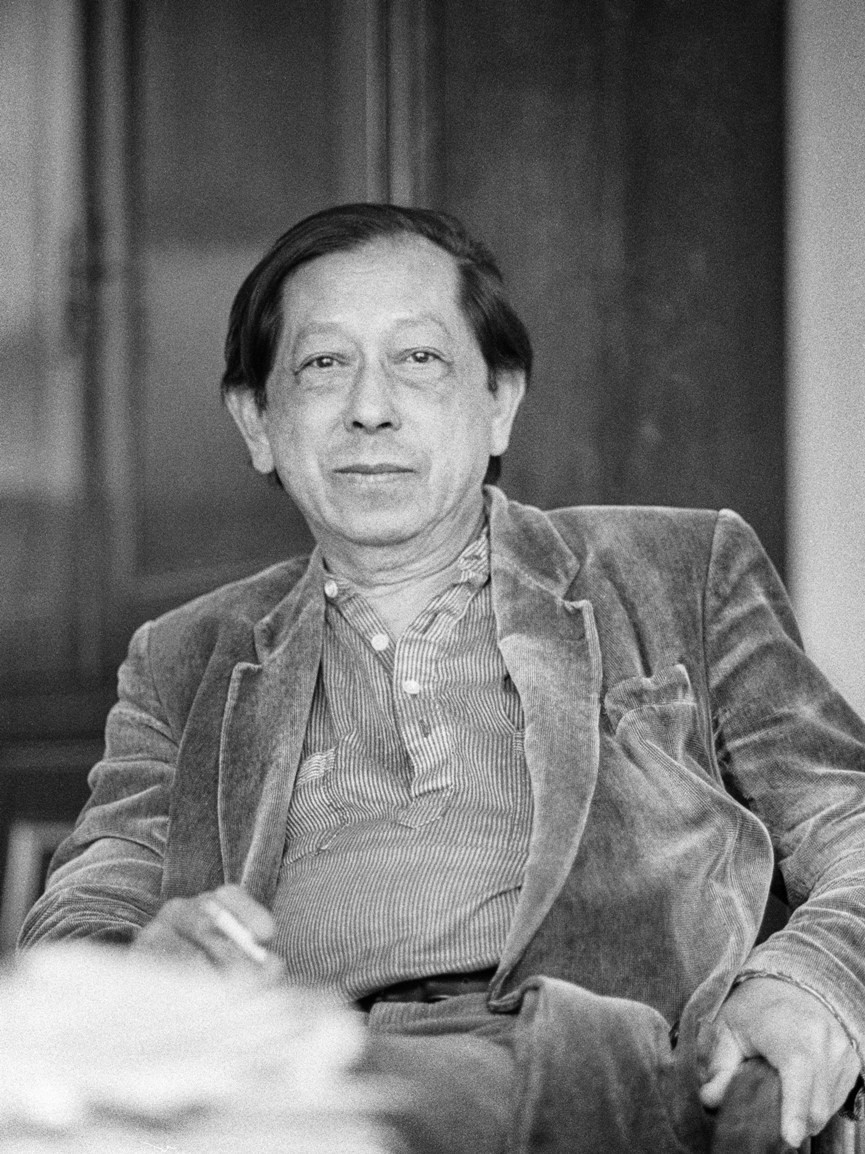
Oey Tjeng Sit
Rent or buy art by Oey Tjeng Sit? At Kunstuitleen.nl you can view 4 works by Oey Tjeng Sit and try it free at home — with delivery and a hanging service throughout the Netherlands.
4 artworks in our collection
The Amsterdam pharmacist-artist Oey Tjeng Sit (1917–1987) did not hesitate to have visitors to an art fair throw crumpled newspaper at cans, set fire to cages filled with crumpled paper, fill warehouses with the same material, and give his artworks titles such as “When cycling against the wind, you might forget that the wheel was invented,” “Anyone who dives into an empty swimming pool is more forgetful than chicken-hearted,” or “A politician’s gold is in his dentures.”
Oey Tjeng Sit—whose name means “Solid Bright Yellow”—was born in Purwokerto (Java), at the foot of the Kloet volcano, which, according to him, “eruptively” added luster to this fact. Born in the Chinese Year of the Dragon, he was exempt from the duty to care for his parents. After attending Chinese school and the HBS in Bandung, he left for the Netherlands to study pharmacy. It wasn’t until twenty years later that he opened “Apotheek Oey” at Prinsengracht 128, diagonally across from the Westertoren.
From this location, Oey—once described by Betty van Garrel as “a dragon man with a passion for Dada”—bombarded his neighbors with art in “Oey’s Etalage,” a cleared-out pharmacy display case. The installations and performances he presented there, together with artists he invited, brought art outside the realm of galleries and museums. This earned him the title “doyen of Amsterdam’s window art.”
The oeuvre of the self-taught Oey is characterized by great artistic versatility. After a period of surrealist drawing and painting, he devoted himself to linocuts, collages, and publishing books through his one-man publishing house “De Vingerpers.”
In his collages (often created with East Indian ink and a brush) and installations, he frequently used newspaper, seeking to prolong its fleeting, news-driven existence. Newspapers raised countless questions for Oey—such as “Is the weight of printed news measurable?” and “What is more enduring than newspaper type?”—which he explored visually without ever expecting a definitive answer.
“If there is such a thing as an order of things, it is of a temporary nature,” wrote Oey, who liked to have his texts signed by his alter ego “Hendrik Saboteur.”
Artwork by Oey Tjeng Sit


Discover more at Kunstuitleen.nl: Collection · Artists · How it works