Joan Miro
Rent or buy art by Joan Miro? At Kunstuitleen.nl you can view work by Joan Miro and try it free at home — with delivery and a hanging service throughout the Netherlands.
Miró was the son of a goldsmith and watchmaker. He initially studied business, but in 1912 he began art studies in Barcelona. In 1920, he moved to Paris, where he took classes at the Académie de la Grande Chaumière. In Paris, Miró befriended Picasso, Max Ernst, Hans Arp, and Magritte and came under the influence of Cubism. Like Picasso and Georges Braque, Miró never took the conclusions of Cubism to the point of complete abstraction. His forms, however alienating they may be, always refer to reality—to concrete reality, or to reality as it exists in dreams.[1]
In 1925, he met André Breton, the founder and theorist of Surrealism. Miró never formally joined the Surrealist movement—or any other movement—but Breton called him “the greatest Surrealist of us all.” The Surrealist André Masson, by his own account, had a great influence on him and introduced him to circles of Parisian poets, writers, and philosophers.
In 1926, he collaborated with the Surrealist Max Ernst on sets and costumes for the ballet *Romeo and Juliet* for Sergei Diaghilev’s Ballets Russes. For this project, he experimented with the grattage technique. In this technique, the (usually dried) paint is scraped off the canvas, creating a unique effect.
At the outbreak of the Spanish Civil War, Miró fled to France, where he first stayed in Paris and then in the coastal town of Varengeville-sur-Mer. There he created the Constellation series. Forced once again by the ravages of war, Miró returned permanently to Spain in 1940. In 1956, he settled on the island of Majorca. Miró married Pilar Juncosa on October 12, 1929. In 1931, the couple had a daughter, Dolores.
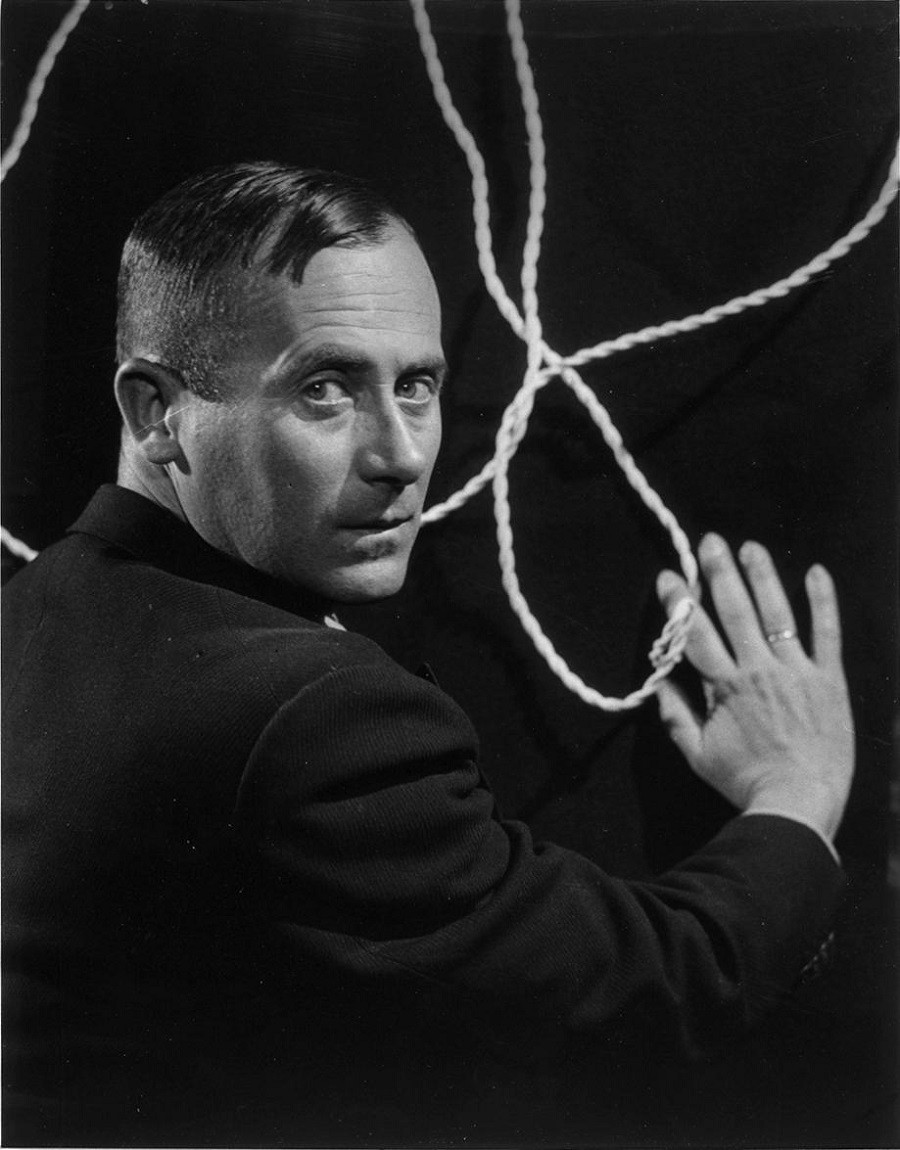
In the 1970s, he created the series he called *The Hope of the Condemned*. In this series, his experiences with war and violence seem to come to the fore. In a completely empty space, he drew a line reminiscent of a noose, but with the bottom left open.[1] In a 1959 interview, Miró said: “If there is something unintentionally funny in my work, it probably stems from the need to escape the tragic side of my temperament. Life seems absurd to me.”[2]
In 1954, Miró was awarded the Venice Biennale Prize for Graphic Art. In 1958, he received the Guggenheim International Award. He was awarded honorary doctorates from Harvard University and the University of Barcelona. In 1979, he received the very first Medalla d’Or de la Generalitat, the highest honor bestowed by the Catalan government.
Discover more at Kunstuitleen.nl: Collection · Artists · How it works · Art for business