Category A
Artist
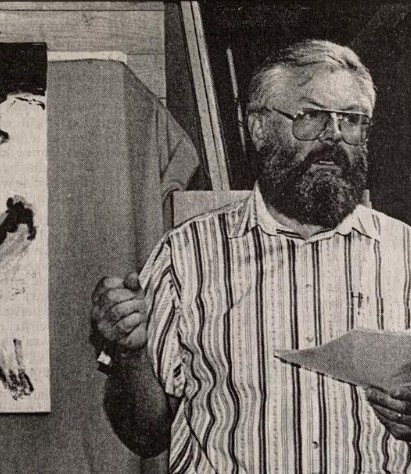
Gerard Bijnens
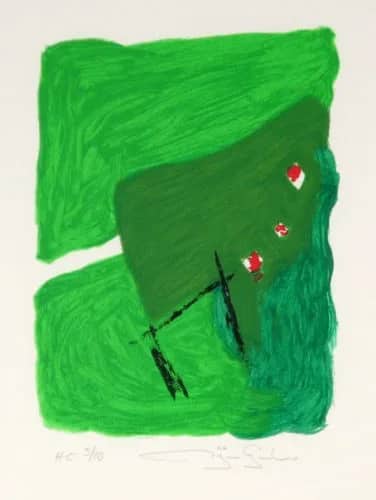
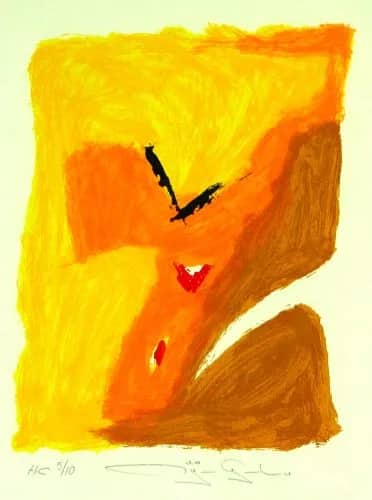
Rent or buy art by Gerard Bijnens? At Kunstuitleen.nl you can view 4 works by Gerard Bijnens and try it free at home — with delivery and a hanging service throughout the Netherlands.
4 artworks in our collection
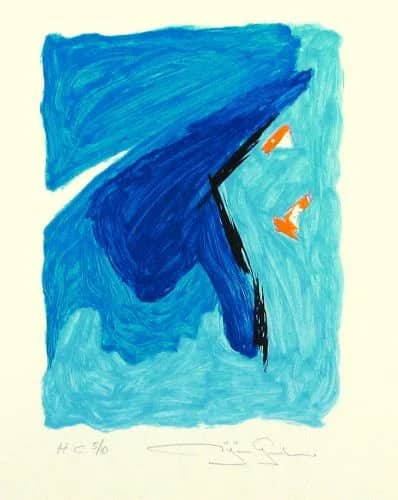
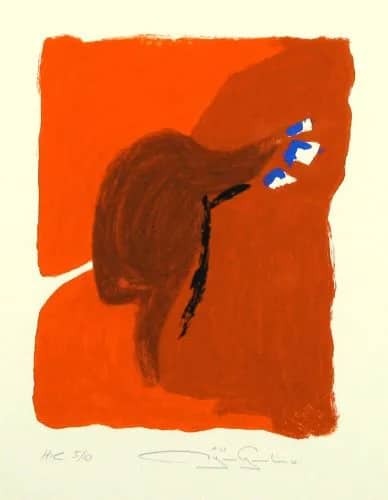
Gerard Bijnens (1944–2015). His entire body of work is characterized by steady innovation achieved through gradual processes; because he never followed in the footsteps of other artists or movements, yet never disavowed himself either, this innovation arose through the assimilation, omission, or reinforcement of specific aspects within his own work. In this way, he always preserved his authenticity as an artist. Gerard Bijnens integrates the world of the cosmos into his work: the cosmos in the literal sense, and the cosmos as a metaphor for human culture, the human condition, because it is an expression, an emanation of his existential unease and doubt about the future—the human future, that is—which he will depict as a cosmic decline. From 1987 onward, this commitment found expression in his “combine paintings”—works incorporating copper plate and other nailed-on elements. The presence of these material additions—which are “foreign” to painting—such as cores with their fanning-out tentacles, is a first unmistakable indication of his impulsive emotionality expressed through a powerful visual language. Around 1989, this style of painting gave way to canvases that were solely “painted,” in which the sphere—though not always placed in the center—is emphatically present in nearly every work. This sphere is painted in a fiery, glowing red, embedded in a black, enveloping band of color, a symbol of mystery and enigma. It depicts a cosmos that still retains its closed nature, yet is already subject to erosion, implosion, and external decay. The dripping patches of color—the coloristic particles, as it were, that have been expelled and are imploding away—bear witness to this. Are these particles—which one might also call “signs” with a communicative value—precisely because of their explosive power the bearers of a rather pessimistic worldview? Gradually—and this has been the case since 1992—the sphere disappears, spatiality expands, and abstraction intensifies. Spatiality and white gain in importance. Painted “battlefields,” in which the opposing forces pierce one another, in which sharp vertical lines move, and in which tense fields of color contend with weathered brushstrokes, balance austerity with emotion. The sensitivity, driven by strength and inspiration, remains conflicted. Yet the plastic balance on the canvas is maintained, even though the moving planes often stand in sharp contrast to one another. In what appears to be his latest series of works, the cosmic concept—at least formally—seems to have been toned down, and the artist focuses even more on pure painting. The red, yellow, and blue particles—"symbols" of wealth, power, and raw materials that used to be scattered across the entire canvas—are now seen only sparingly. The rivaling and contrasting planes, too, give way to expansive fields of color, in which the tension feels less dramatic and is intended to be less pessimistic. Because emotional intensity and engagement cannot remain permanently rooted in the outside world, the artist consequently turns inward. The psychological—existentialist—sensibility gives way to introspective reflection, yet the power of the color scheme will not diminish. An increasingly optimistic outlook on life emerges. Art has to do with insight and awareness: perhaps the guiding principle of Gerard Bijnens, who, in his search for the meaning of life, the role of humanity in cosmic events, and the artist’s function within that, steadily and quite logically builds upon his earlier work. He applies this approach to “sculpture” as well, a medium he has pursued with great intensity since 1995. In this sculpting, he works in a traditional manner, chiseling, sawing, grinding, and drilling his favorite material: bluestone, though he also works with granite, marble, and the somewhat softer French stone. It is obvious that the sculptor draws on the experience and creativity—that is, the artistic achievements—of the painter, so that in this discipline as well, he continues to create “spatial” work through contrasting movements: vertical versus horizontal, round openings or similarly rounded protrusions.
There is also a constant interplay of balance and contrast between soft curves and sharper incisions. Very often starting from the original capriciousness or naturalness of the chunk of stone, and just as often moving toward the core, the primal source, a central round shape—a cosmic prefiguration?- In his work, Gerard Bijnens seeks to bring the stone to life formally through his method of cutting: firm strokes, short, abrupt jabs, head-on and crosswise, grained and polished. Through this, the stone reveals its hidden inner core and colors. Indeed, this artist treats his material with great respect during the creative ritual, in which he is constantly face to face with his stone’s most precious possession: its inalienable age, its substance formed through years of organic assimilation, to which he gives form with great love, even greater expertise, and a new, artistically justified shape.
Artwork by Gerard Bijnens
Category A
Category A
Category A
Discover more at Kunstuitleen.nl: Collection · Artists · How it works